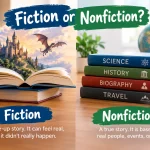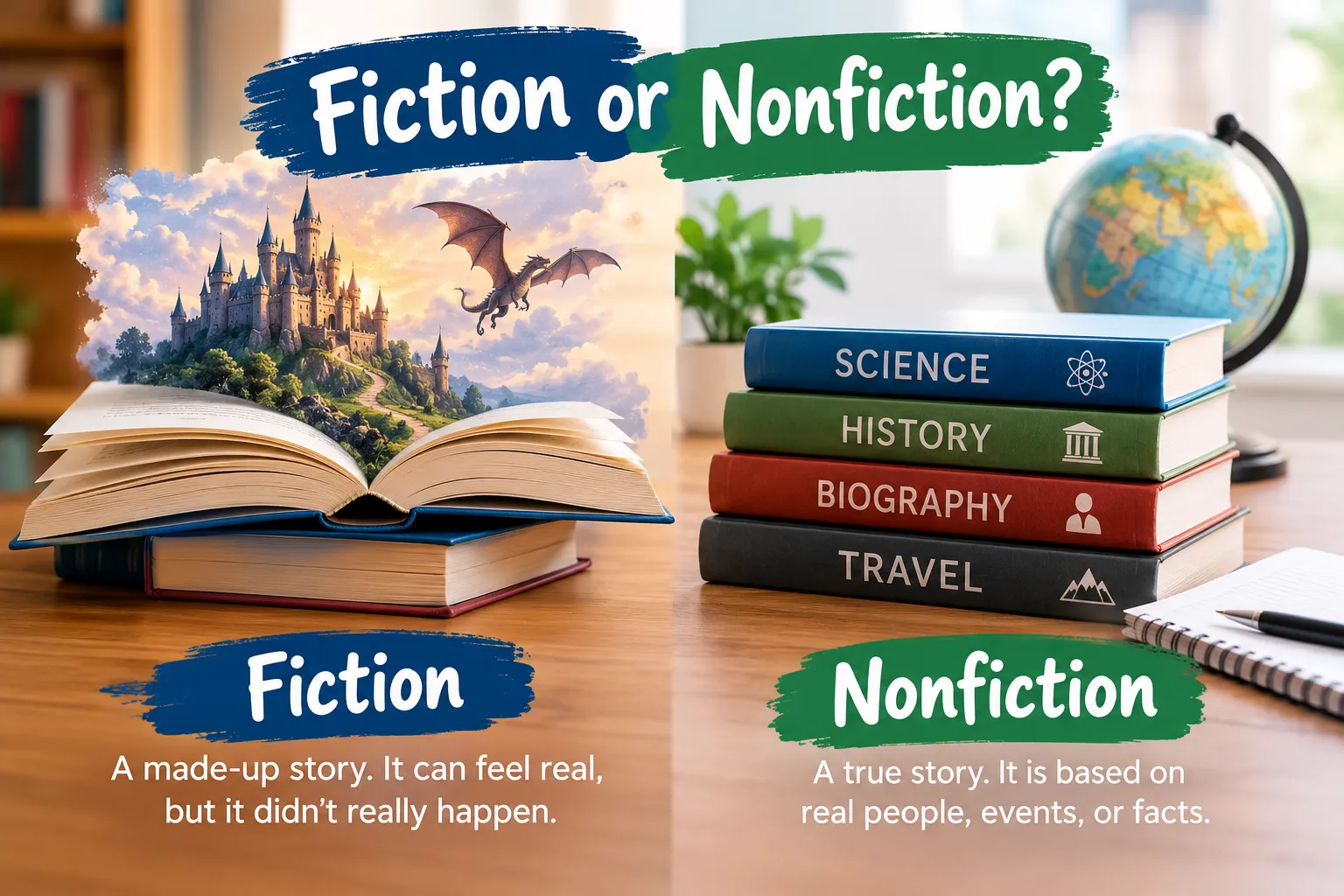
Fiction is a made-up story. Nonfiction is writing about real people, facts, and events.
Imagine you visit a library. You find a book about a magic tree. You also find a book about animals. The first book tells a made-up story. The second book gives facts about real animals.
The first book is fiction. The second book is nonfiction.
Fiction uses ideas from the mind. It may have magic, fun, or brave heroes. Nonfiction tells readers about the real world. It can teach us about plants, space, history, or famous people.
People search for fiction or nonfiction because they want to know the difference. Students may need these words for school. Readers may also want to choose the right book.
Both types of writing can be fun and useful. Fiction can teach life lessons through stories. Nonfiction can help us learn facts and new skills.
In this guide, you will learn the meaning, sound, and use of both words. You will also see easy examples to help you remember them.
Pronunciation
| Word | US Pronunciation | UK Pronunciation |
| Fiction | FIK-shun | FIK-shun |
| Nonfiction | non-FIK-shun | non-FIK-shun |
The words sound almost the same in US and UK English.
Read More About https://orlymean.com/kiki-or-bouba/
Difference Between Fiction and Nonfiction
1. Meaning
Fiction is made-up writing. Nonfiction is about real life.
Examples:
- Fiction: A boy meets a dragon.
- Nonfiction: A book tells us how birds fly.
2. Events
Fiction can tell about events that never happened. Nonfiction aims to tell what really happened.
Examples:
- Fiction: A girl walks on the moon.
- Nonfiction: A book tells us about the moon.
3. Main Goal
Fiction often aims to entertain. Nonfiction often aims to teach.
Examples:
- Fiction: A funny story makes us laugh.
- Nonfiction: A book teaches us about plants.
4. Characters
Fiction can have made-up people and animals. Nonfiction often talks about real people and animals.
Examples:
- Fiction: A talking cat helps a boy.
- Nonfiction: A book tells the life story of a real player.
5. Facts
Fiction does not need every part to be true. Nonfiction should use facts.
Examples:
- Fiction: A tree talks to a child.
- Nonfiction: A book tells us why trees need water.
6. Book Types
Fiction includes novels, fairy tales, and short stories. Nonfiction includes guides, reports, and life stories.
Examples:
- Fiction: A story about a lost king.
- Nonfiction: A book about world history.
7. Imagination
Fiction often uses ideas from the mind. Nonfiction uses facts to explain real things.
Examples:
- Fiction: A boy rides a flying horse.
- Nonfiction: A book explains how horses live.
8. Learning
Fiction can teach lessons through a story. Nonfiction gives facts and ideas.
Examples:
- Fiction: A story teaches us to be kind.
- Nonfiction: A book teaches us how to grow food.
9. Truth
Fiction may mix real things with made-up events. Nonfiction aims to tell the truth.
Examples:
- Fiction: A story has a real city and a magic hero.
- Nonfiction: A book tells true facts about that city.
10. Choosing a Book
Choose fiction for a story. Choose nonfiction to learn about real things.
Examples:
- Fiction: Read a tale about a brave hero.
- Nonfiction: Read a book about brave people in history.
Nature and Behaviour of Fiction and Nonfiction
Fiction
Fiction tells stories. These stories may be funny, sad, or full of adventure. They may have made-up people, places, and events.
Fiction can also teach us about friendship, care, and courage. A story may use real places but still have made-up parts.
Nonfiction
Nonfiction shares facts about real life. It can teach us about animals, people, science, and history.
A book about how plants grow is nonfiction. A book about the life of a real person can also be nonfiction.
Good nonfiction should use facts that readers can check.
Why People Get Confused
Both types of writing use words to share ideas. Some fiction stories use real places and people. This can make readers think the whole story is true.
Nonfiction can also have mistakes. So, readers should check important facts.
Remember this simple rule: fiction tells a made-up story, while nonfiction aims to share facts about real life.
Comparison Table
| Feature | Fiction | Nonfiction |
| Meaning | Made-up story | Real facts |
| Main goal | Often entertains | Often teaches |
| People | May be made up | Often real |
| Events | May be made up | Aims to tell real events |
| Imagination | Often used | May help explain ideas |
| Book types | Fairy tales and novels | Guides and life stories |
| Facts | Need not all be true | Should be correct |
| Similarity | Both use words | Both share ideas |
The Origin of the Words
The word fiction comes from a Latin word that means to shape or form. Over time, it became linked to stories made by the mind.
The word nonfiction has two parts. Non means “not,” and fiction means made-up writing. So, nonfiction means writing that is not fiction.
Today, both words help us name different types of books.
British vs American English
The meaning is the same in both types of English.
| American English | British English |
| Fiction | Fiction |
| Nonfiction | Non-fiction is also common |
| Fiction book | Fiction book |
| Nonfiction book | Non-fiction book |
Examples:
- US: I like nonfiction books.
- UK: I like non-fiction books.
- Both: This fiction story is fun.
Both spellings are easy to understand. Use one style in your writing.
Which One Should You Use?
Use fiction for made-up stories. Use nonfiction for writing about real life.
In the US, nonfiction is common. In the UK, non-fiction is also common. Both are correct forms.
For school work, follow your teacher’s rules. When you write about a real person or event, nonfiction may be the right choice. When you make up a story, fiction is the right choice.
Common Mistakes
- Wrong: Fiction means bad writing.
Right: Fiction is a type of writing. - Wrong: Nonfiction is always boring.
Right: Nonfiction can be fun. - Wrong: All parts of fiction are made up.
Right: Fiction can use real places and people. - Wrong: Nonfiction can never have mistakes.
Right: Writers can make mistakes. - Wrong: Nonfiction must always have a hyphen.
Right: Both nonfiction and non-fiction are used.
Everyday Usage Examples
In Emails
- Please suggest a good fiction book.
- I need a nonfiction book for school.
On Social Media
- I enjoy stories about brave heroes.
- This book taught me about space.
In News
- The writer has a new work of fiction.
- The report shares facts about the past.
In Formal Writing
- Fiction often uses made-up events.
- Nonfiction shares facts about real life.
Usage Trends
Both words are common in schools, libraries, and bookshops.
Fiction includes fairy tales, novels, and stories about made-up heroes. Nonfiction includes books about science, history, sports, and real people.
Some people read fiction for fun. Others read nonfiction to learn new things. Both types can help readers grow and learn.
Metaphors and Similes
These words are mainly used to talk about writing. The word fiction can also mean a story that seems untrue.
Examples:
- His excuse sounded like fiction.
- The facts were as clear as a map.
The first sentence means that the excuse seemed made up.
Connotative Meaning
The words can bring different feelings to mind.
- Fiction: Fun, wonder, and new ideas.
- Nonfiction: Facts, learning, and knowledge.
Examples:
- The fiction book was full of magic and fun.
- The nonfiction book taught me about animals.
Both words are neutral. Their meaning depends on how people use them.
Idioms and Proverbs
There is a well-known saying: “Truth is stranger than fiction.”
It means that real events can sometimes be more surprising than made-up stories.
Example: The strange event really happened. Truth is stranger than fiction!
Another phrase is “The facts speak for themselves.” It means the facts give a clear message.
Literature and Movies
Books
- Alice’s Adventures in Wonderland by Lewis Carroll (1865) is a work of fiction.
- The Diary of a Young Girl by Anne Frank (first published in 1947) shares real diary entries.
Movies
- Toy Story (1995, USA) is a fiction film about toys that come to life.
- March of the Penguins (2005, France) is a documentary about real penguins.
These examples show the difference between made-up stories and real-life information.
Why This Difference Matters
Knowing these words helps students choose the right books. It also helps them write better school work.
If you want facts about animals, choose nonfiction. If you want a story about a magic animal, choose fiction.
The difference also matters when reading news or online posts. Readers should check if a story is made up or based on real facts.
Both types of writing are useful. Fiction helps us enjoy stories and use our imagination. Nonfiction helps us learn about the world.
Usefulness in Daily Life
You may use these words when you visit a library, buy a book, or do school work.
Choose nonfiction to learn about plants, sports, or history. Choose fiction to enjoy a story about magic, heroes, or new worlds.
These words can also help you talk about books and films. When you need true facts, use a trusted source.
Situational Preference
Choose fiction when you want a fun story or want to use your imagination. Choose nonfiction when you need facts for school or daily life. A book about animals is nonfiction. A tale about a talking animal is fiction. If you want to enjoy reading and learn new things, try both types. In US English, nonfiction is common. In UK English, non-fiction is also common. The best choice depends on what you want to read or learn.
Possible Short Questions
1. What is the main difference?
Fiction is made-up writing. Nonfiction is about real life.
2. Is fiction always false?
No. Fiction can use real places and people, but some events may be made up.
3. Is nonfiction always true?
Nonfiction aims to share facts, but writers can make mistakes.
4. Is a life story fiction or nonfiction?
A true life story is nonfiction. It tells about a real person.
5. Is a fairy tale fiction or nonfiction?
A fairy tale is fiction because it tells a made-up story.
6. Should I write nonfiction or non-fiction?
Both forms are used. Follow your teacher or publisher’s style.
7. Can fiction teach us lessons?
Yes. Fiction can teach us about kindness, friendship, and courage.
Conclusion
Fiction and nonfiction are two main types of writing. Fiction tells made-up stories. Nonfiction aims to share facts about real people, places, and events.
Fiction includes fairy tales, novels, and stories about heroes. It often uses imagination to make reading fun. Nonfiction includes books about science, history, sports, and real people. It helps readers learn about the world.
The main difference is easy to remember. Fiction does not need every event to be true. Nonfiction should use facts that readers can check. Still, fiction can use real places, and nonfiction can contain mistakes.
Both types of writing are useful. Fiction can help us enjoy stories and think about feelings. Nonfiction can help us learn facts and new skills.

I’m Ghafoor Khan, a content writer and blogger at Orly. I write simple, engaging articles on English grammar, word meanings, synonyms, antonyms, and vocabulary to help readers improve their English skills.