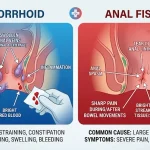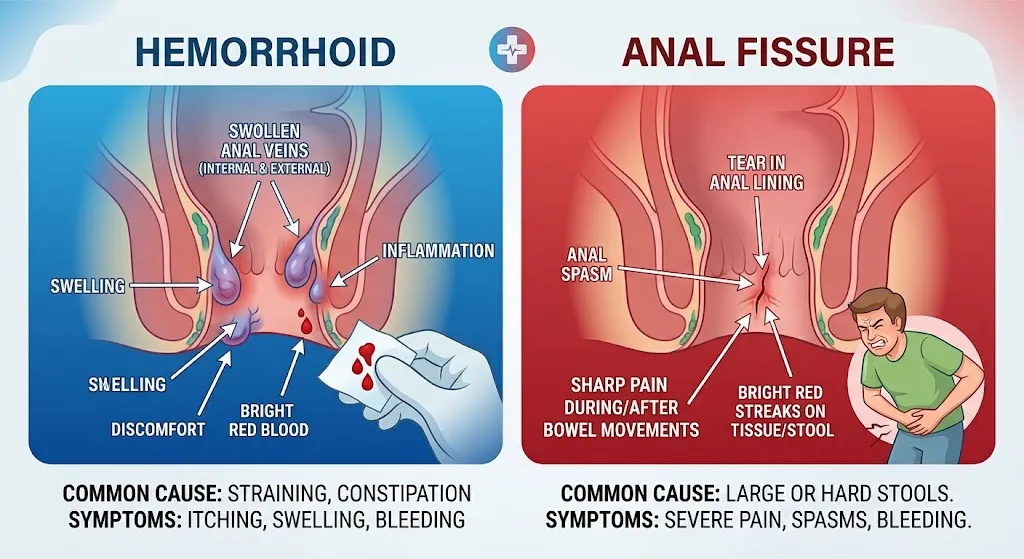
A hemorrhoid is swollen tissue near the anus. A fissure is a small tear in the skin near the anus.
Both problems can cause pain or blood when you use the toilet. This can make it hard to know the cause.
Think of a person who feels pain when passing stool. They may see a little blood on the toilet paper. They may ask, “Do I have a hemorrhoid or a fissure?”
A hemorrhoid is also called a pile. It may cause a lump, swelling, or itching. An anal fissure is a small tear. It often causes sharp pain when stool passes. The pain may last after going to the toilet.
People search for hemorrhoid or fissure to learn the main signs of each problem. They also want to know when to see a doctor.
This guide explains both words in easy English. It covers their signs, causes, spelling, and use. But signs alone cannot tell you which problem you have. A doctor can help find the cause.
Pronunciation
| Word | US Pronunciation | UK Pronunciation |
| Hemorrhoid | HEM-uh-roid | HEM-uh-roid |
| Fissure | FISH-er | FISH-uh |
The UK spelling of hemorrhoid is often haemorrhoid.
Read More About https://orlymean.com/sheer-or-shear/
Difference Between Hemorrhoid and Fissure
1. Meaning
A hemorrhoid is swollen tissue with blood vessels. A fissure is a small tear in the skin or lining near the anus.
Examples:
- The doctor found a hemorrhoid.
- The doctor found an anal fissure.
2. Cause
Straining and hard stool can lead to hemorrhoids. Hard stool can also cause a fissure.
Examples:
- A person strains too much on the toilet.
- Hard stool causes a small tear.
3. Pain
A fissure often causes sharp pain when you pass stool. A hemorrhoid may cause pain, swelling, or itching.
Examples:
- A person feels sharp pain during a bowel movement.
- A person feels pain near a swollen lump.
4. Blood
Both problems can cause bright red blood. A fissure often causes pain with the blood. Some hemorrhoids bleed with little pain.
Examples:
- A person sees blood on toilet paper and feels pain.
- A person sees blood but feels little pain.
5. Swelling
A hemorrhoid may cause a lump near the anus. A fissure is a tear, not a swollen vein.
Examples:
- A person finds a small lump near the anus.
- A doctor finds a small tear in the skin.
6. Itching
Hemorrhoids may cause itching. A fissure may cause pain and burning.
Examples:
- A person feels itchy skin near the anus.
- A person feels burning after passing stool.
7. Toilet Use
Both problems can make toilet use hard. A fissure often hurts when stool passes over the tear.
Examples:
- A person feels sharp pain while passing stool.
- A person feels pressure near a swollen hemorrhoid.
8. Healing
Mild cases may get better with the right care. Soft stool can help a fissure heal. Simple changes may also help hemorrhoid symptoms.
Examples:
- A person eats more foods with fiber.
- A person drinks enough water each day.
9. Treatment
The right care depends on the cause and how bad the problem is. A doctor may suggest a cream, medicine, or another form of care.
Examples:
- A doctor gives advice for a hemorrhoid.
- A doctor gives cream to help a fissure heal.
10. Diagnosis
The signs can be alike. A doctor may need to check the area to find the cause.
Examples:
- A person sees blood and asks a doctor for help.
- A person has pain that does not go away.
Nature and Behaviour of Both Problems
Hemorrhoids
Hemorrhoids are swollen blood vessels and tissue near the anus or in the lower rectum. They can cause itching, swelling, pain, or blood.
Some are inside the rectum. Others are under the skin near the anus. Some cause few signs, while others need care.
Fissures
An anal fissure is a small tear near the anal opening. It often hurts when stool passes. The pain may last after using the toilet.
Hard stool can make the tear worse. Soft stool may help it heal. Some tears need medicine or other care from a doctor.
Why People Get Confused
Both problems can cause pain and blood. Both may also happen with constipation.
Sharp pain during and after passing stool is common with a fissure. A lump or itching may happen with hemorrhoids. But these signs do not prove the cause.
A doctor can check the problem and suggest the right care.
Comparison Table
| Feature | Hemorrhoid | Fissure |
| Meaning | Swollen blood vessels and tissue | Small tear in the skin |
| Main sign | Swelling or itching | Sharp pain |
| Blood | May occur | May occur |
| Lump | May be present | Usually not |
| Cause | Straining may play a part | Hard stool may cause a tear |
| Pain | May be mild or strong | Often sharp |
| Care | Depends on the case | Helps the tear heal |
| Spelling | Hemorrhoid in US English | Fissure in both US and UK English |
The Origin of the Words
The word hemorrhoid comes from old Greek roots linked to blood flow. It became part of English through older forms of the word.
The word fissure comes from Latin. It means a split or crack.
Today, both words are used in health care. The word fissure can also mean a crack in rock or a split between groups.
British vs American English
US and UK English use different spellings for one of these words.
| American English | British English |
| Hemorrhoid | Haemorrhoid |
| Hemorrhoids | Haemorrhoids |
| Fissure | Fissure |
| Anal fissure | Anal fissure |
Examples:
- US: I read about hemorrhoids.
- UK: I read about haemorrhoids.
- Both: The doctor found an anal fissure.
Which One Should You Use?
Use hemorrhoid in American English and haemorrhoid in British English. Use anal fissure for a small tear near the anus.
For a global audience, explain each word in simple English. You can also use piles, a common name for hemorrhoids.
If you write a health article, do not tell readers to guess their illness from one sign. Explain the signs and advise them to seek medical help when needed.
Common Mistakes
- Wrong: A hemorrhoid and a fissure are the same.
Right: They are two different problems. - Wrong: All blood comes from hemorrhoids.
Right: Blood can have many causes. - Wrong: A fissure never hurts.
Right: A fissure often causes sharp pain. - Wrong: All hemorrhoids cause strong pain.
Right: Some cause little or no pain. - Wrong: Hemorrhoid is the only correct spelling.
Right: Haemorrhoid is common in UK English. - Wrong: One sign can prove the cause.
Right: A doctor may need to check.
Everyday Usage Examples
In Emails
- I need to book a visit with my doctor.
- I have pain and need medical advice.
On Social Media
- Hemorrhoids and fissures are not the same.
- Ask a doctor if the pain does not go away.
In News
- Doctors advise people not to ignore rectal bleeding.
- Health experts explain how hard stool can cause pain.
In Formal Writing
- Hemorrhoids can cause swelling and bleeding.
- An anal fissure is a small tear near the anus.
Usage Trends
Both words appear in health books, websites, and medical guides. People often search for them when they have pain, itching, or blood after using the toilet.
US websites often use hemorrhoid. UK websites often use haemorrhoid. The word anal fissure is used in both countries.
Search trends can change over time. Current keyword tools can help writers check search numbers.
Metaphors and Similes
These words are mainly used in health care.
The word fissure can also mean a crack or split.
Examples:
- A fissure formed in the rock.
- A fissure grew between the two groups.
The word hemorrhoid is not often used as a metaphor.
Connotative Meaning
Both words have a neutral meaning in health care. Some people may feel shy or worried when they talk about these problems.
- Hemorrhoid: Swollen tissue near the anus.
- Fissure: A small tear in the skin.
- Piles: A common name for hemorrhoids.
It is best to use clear and kind words when talking about health.
Idioms and Proverbs
There are no common English idioms that compare hemorrhoids and fissures.
The word fissure can mean a split between people.
Example: “A fissure grew between the two teams.”
This means the teams had a deep gap or disagreement. It does not mean a health problem.
Literature and Movies
These health problems are not common themes in major books or films. They may appear in health guides or as a small part of a story.
For facts about symptoms and care, medical guides are more useful than films. Writers should not name a book or movie unless it truly fits the topic.
Why This Difference Matters
Knowing the difference helps people talk about their health. They can tell a doctor if they have pain, itching, swelling, or blood.
But these signs do not always show the cause. Other health problems can cause the same signs.
Good health writing should use clear words and correct facts. It should help readers know when to get medical advice.
Usefulness in Daily Life
These words can help when you speak to a doctor or read a health guide.
To help prevent hard stool, eat foods with fiber, drink enough water, and avoid long periods of straining on the toilet. These steps may help, but they do not treat every cause of pain or bleeding.
See a doctor if pain or bleeding continues. Get urgent care for heavy bleeding, faintness, or severe pain.
Situational Preference
Use hemorrhoid for swollen blood vessels and tissue near the anus. Use anal fissure for a small tear in the anal lining. In US writing, spell it hemorrhoid. In UK writing, haemorrhoid is common. For readers around the world, explain both words in simple English. If you have symptoms, do not choose a diagnosis by yourself. Tell a doctor what you feel and when it happens. The right name depends on the real cause.
Possible Short Questions
1. What is the main difference?
A hemorrhoid is swollen tissue. A fissure is a small tear.
2. Which one often causes sharp pain?
A fissure often causes sharp pain when passing stool.
3. Can both cause blood?
Yes. Both can cause bright red blood.
4. Can hard stool cause these problems?
Hard stool can make hemorrhoids worse and can cause a fissure.
5. Are hemorrhoids the same as piles?
Yes. Piles is another name for hemorrhoids.
6. How do people in the UK spell hemorrhoid?
They often spell it haemorrhoid.
7. When should I see a doctor?
Get medical advice for bleeding, ongoing pain, or symptoms that do not improve. Heavy bleeding or severe pain needs urgent care.
Conclusion
Hemorrhoids and anal fissures are two different health problems. Both can cause pain or blood near the anus, but they are not the same.
A hemorrhoid is swollen tissue with blood vessels. It may cause a lump, itching, swelling, or bleeding. A fissure is a small tear in the skin or lining near the anus. It often causes sharp pain when passing stool.
Hard stool and straining can play a part in these problems. Eating foods with fiber, drinking enough water, and avoiding long toilet visits may help. Some people need medicine or other care from a doctor.
Do not try to name the problem by looking at one sign. Other health problems can cause similar signs. See a doctor if you have bleeding or pain that does not go away.

I’m Ghafoor Khan, a content writer and blogger at Orly. I write simple, engaging articles on English grammar, word meanings, synonyms, antonyms, and vocabulary to help readers improve their English skills.