The correct word is imbalance. Inbalance is not the standard spelling.
Many English learners search for inbalance or imbalance because the two words look similar.
You may talk about work, money, power, or You may write, “There is an inbalance in the system.”
But imbalance is the correct word. The correct sentence is, “There is an imbalance in the system.”
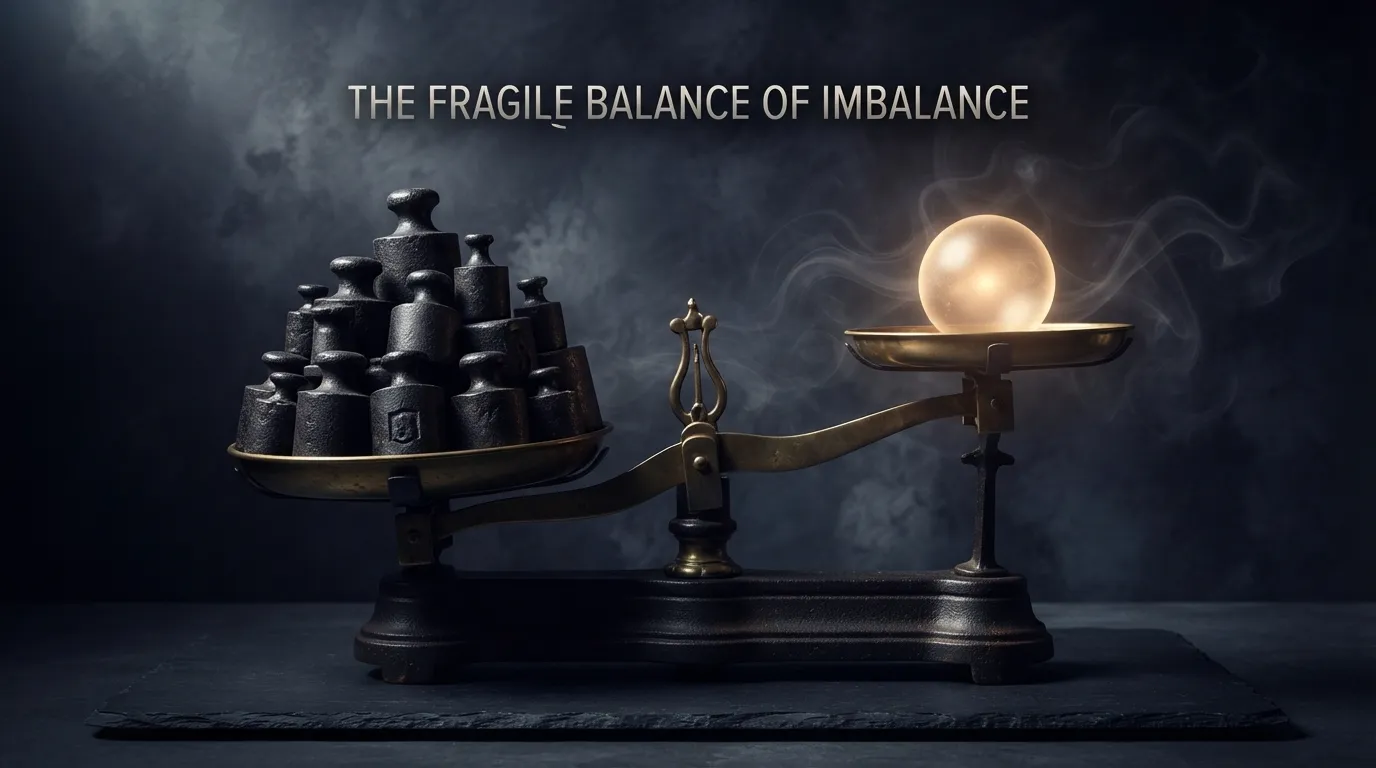
The word imbalance means a lack of balance. It can describe a situation where things are not equal or even. It is common in business, health, education, science, and daily English.
In balance is a two-word phrase. It means that something is balanced or correct.
This difference can confuse many people. Words like incorrect and incomplete may make inbalance look correct. Imbalance is the standard word.
Remember this simple rule:
Remember this simple rule: imbalance = a lack of balance.
Pronunciation
Imbalance
- US: /ˌɪmˈbæl.əns/
- UK: /ˌɪmˈbæl.əns/
- Easy pronunciation: im-BAL-uhns
Inbalance
Inbalance is not the standard word for this meaning.
Difference Between Inbalance and Imbalance
1. Spelling
Imbalance is the correct standard spelling.
- There is an imbalance in the market.
- The team has an imbalance.
Inbalance is usually a spelling mistake.
2. Meaning
Imbalance means a lack of balance or equality.
- There is an imbalance in the budget.
- There is an imbalance between supply and demand.
Inbalance does not have this standard meaning.
3. Grammar
Imbalance is a noun.
- The imbalance is clear.
- We need to fix the imbalance.
It should not be replaced by inbalance.
4. Formal Writing
Use imbalance in formal writing.
- The report shows an imbalance.
- The study found an imbalance.
Using inbalance may look like a spelling error.
5. Work Emails
Use imbalance in professional emails.
- There is an imbalance in the workload.
- We need to solve this imbalance.
6. Academic Writing
Students should use imbalance in essays and reports.
- The study found an imbalance between the two groups.
- The paper explains the economic imbalance.
7. Business English
Imbalance is common in business.
- There is a trade imbalance.
- The company has an imbalance in resources.
8. Health English
The word is also used in heal
- The doctor found a chemical imbalance.
- The test showed an electrolyte imbalance.
9. American English
American English uses imbalance.
- There is an imbalance in the market.
- The system has an imbalance.
10. British English
British English also uses imbalance.
- There is an imbalance in the market.
- The report shows an imbalance.
There is no different US or UK spelling for this word.
Nature and Behaviour of Inbalance and Imbalance
Inbalance
Inbalance is normally an incorrect spelling of imbalance. It is best to avoid it in standard English.
Imbalance
Imbalance describes a condition where things are not equal, even, or properly matched.
It can describe:
- money
- power
- work
- trade
- resources
- supply
- demand
- health
- social conditions
Why People Get Confused About Inbalance and Imbalance
The main reason is English spelling.
Many words begin with in-, such as:
- incorrect
- incomplete
- inactive
- invisible
Because of this, inbalance may seem correct.
But English spelling can change. Before b, in- can become im-.
Examples include:
- imbalance
- impossible
- imperfect
- impatient
There is also the phrase in balance.
Compare:
The system has an imbalance.
This means the system is not balanced.
The system is in balance.
This means the system is balanced.
Comparison Table
| Feature | Inbalance | Imbalance |
| Standard spelling | No | Yes |
| Meaning | Usually an error | Lack of balance |
| Word type | Not standard | Noun |
| Formal writing | Avoid | Use |
| Academic writing | Avoid | Use |
| Business writing | Avoid | Use |
| US English | Avoid | Use |
| UK English | Avoid | Use |
| Global English | Avoid | Use |
The Origin of Imbalance
The word imbalance is made from im- and balance.
The word balance entered English through French. It is linked to the idea of scales used to compare weight.
The prefix im- gives the word a negative meaning.
So we get:
balance → imbalance
It means that something is not balanced.
That is why imbalance is the correct spelling.
British vs American English
There is no important difference between British and American English here.
Both use:
imbalance
For example:
- US: There is an imbalance in the budget.
- UK: There is an imbalance in the budget.
Some words have different US and UK spellings.
- color / colour
- center / centre
Which One Should You Use?
Use imbalance when things are not balanced
It is suitable for:
- school work
- emails
- websites
- reports
- business writing
- academic writing
- news articles
Use in balance when you mean that something is balanced.
For example:
The budget is in balance.
Do not write:
The budget is inbalance.
The safest rule is simple:
Imbalance = lack of balance
In balance = balanced
Common Mistakes
Mistake 1
❌ There is an inbalance in the workload.
✅ There is an imbalance in the workload.
Mistake 2
❌ There is an inbalance between the teams.
✅ There is an imbalance between the teams.
Mistake 3
❌ The system is imbalance.
✅ The system is imbalanced.
Mistake 4
❌ The accounts are imbalance.
✅ The accounts are in balance.
Mistake 5
❌ There is an imbalanced between the groups.
✅ There is an imbalance between the groups.
Everyday Usage Examples
In Emails
We need to discuss the imbalance in the workload.
On Social Media
There is an imbalance between work and free time.
In News
The report showed an economic imbalance.
In Business
The company wants to fix the imbalance in resources.
In Education
The study found an imbalance between teachers and students.
In Sports
The team has an imbalance between attack and defense.
Usage Trends
Imbalance is used in many areas of modern English.
It is common in:
- business
- economics
- health
- science
- education
- sports
- social issues
People may write inbalance online by mistake. But using it online does not make it correct.
For professional writing, school work, and SEO content, imbalance is the better choice.
Metaphors and Similes
Imbalance can describe ideas and physical things.
Metaphor
There is an imbalance of power.
This means one side has more power than the other.
Simile
His life was like a scale with an imbalance on one side.
This compares an uneven life with an uneven scale.
Another useful phrase is:
His work and home life are out of balance.
This means he does not have a good balance between work and home life.
Connotative Meaning
Imbalance is usually neutral or negative.
Negative Meaning
The country has a serious economic imbalance.
Here, the word shows a problem.
Neutral Meaning
The machine has a small weight imbalance.
Here, it simply describes a condition.
The word itself is not always negative. The meaning depends on the sentence.
Idioms and Proverbs
There is no common English proverb that uses imbalance directly.
However, there are useful expressions with balance.
In Balance
The budget is in balance.
Out of Balance
His work and home life are out of balance.
Strike a Balance
You should strike a balance between work and rest.
Keep Your Balance
He tried to keep his balance.
These phrases are useful in everyday English.
Literature and Movies
The idea of imbalance is common in books and films. Writers often talk about power, money, class, and social differences.
Literature
Animal Farm by George Orwell was published in 1945. It explores power and inequality.
Pride and Prejudice by Jane Austen was published in 1813. It explores class, money, and social life.
Movies
The Dark Knight is a US movie from 2008. It explores power, order, and chaos.
Parasite is a South Korean movie from 2019. It explores class and economic inequality.
These works show how imbalance can describe problems in society.
Why This Difference Matters
Correct spelling makes your writing clear and professional.
For English learners, inbalance may look correct. But imbalance is the correct word.
This shows an important English rule. We cannot always add in- to make a new word.
Learn the difference between imbalance and in balance.
Remember:
Imbalance = lack of balance
In balance = balanced
This simple rule can improve your English writing.
Usefulness in Daily Life
You can use imbalance in many situations.
At work:
There is an imbalance in the workload.
In business:
The company has a trade imbalance.
In education:
There is an imbalance between teachers and students.
In sports:
The team has an imbalance between attack and defense.
In society:
There is an imbalance of power.
In science:
The test showed an imbalance.
The word can describe many cases where things are not equal.
Situational Preference
Use imbalance when things are not equal. It means there is a lack of balance. You can use this word in emails, school work, reports, and websites.
Use in balance when things are equal. For example, “The budget is in balance” means the budget is balanced.
Do not write inbalance as one word. This rule is the same in American, British, and global English. For work, school, or international writing, imbalance is the safe choice.
Possible Short Question
Is inbalance a correct word?
No. Imbalance is the standard word for a lack of balance.
Is imbalance one word?
Yes. Imbalance is written as one word.
What does imbalance mean?
It means a lack of balance, equality, or proper proportion.
What is the difference between imbalance and in balance?
Imbalance means a lack of balance.
In balance means balanced.
Is imbalance used in American English?
Yes. It is standard in American English.
Is imbalance used in British English?
Yes. It is also standard in British English.
How do you pronounce imbalance?
It sounds like im-BAL-uhns.
Conclusion
The correct word is imbalance. It means a lack of balance, equality, or proper proportion. Inbalance is usually a spelling mistake and should be avoided in standard English.Do not confuse imbalance with in balance. They have different meanings. Imbalance is one word and describes an uneven condition. In balance has two words and describes a balanced condition.The spelling imbalance is the same in American and British English. You can use it in emails, school work, business reports, websites, news, and daily English.

I’m Ghafoor Khan, a content writer and blogger at Orly. I write simple, engaging articles on English grammar, word meanings, synonyms, antonyms, and vocabulary to help readers improve their English skills.