An “alliance” is a team-up between groups. “Allegiance” is loyalty to one side.
Picture this. Two small business owners, Sam and Priya, join forces to sell products together. They form an alliance. But Sam’s employee, Tom, feels torn. He still owes his allegiance to his old boss, not the new partner. This mix of teamwork and loyalty causes real confusion.
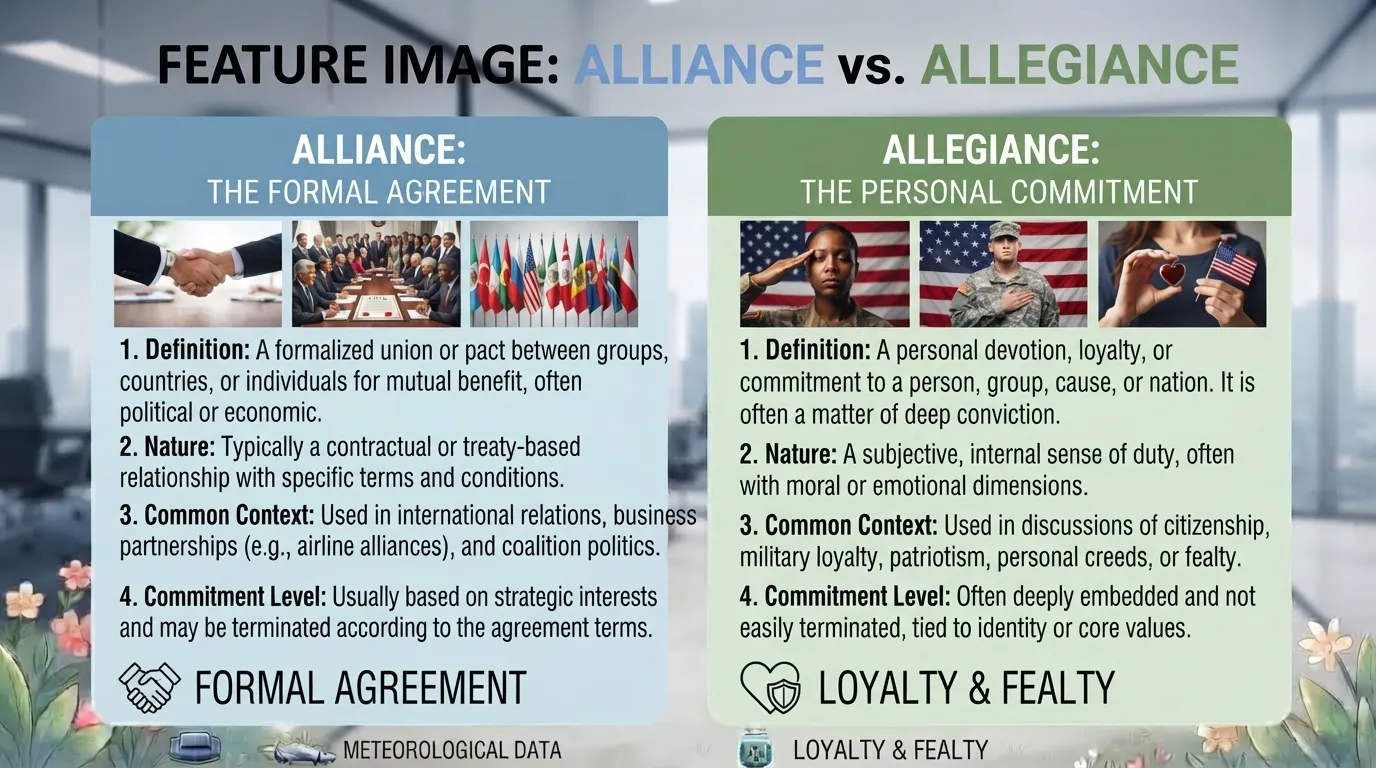
This is the classic alliance vs allegiance mix-up. An “alliance” means a bond or agreement between two or more groups. It is about teamwork. “Allegiance” means loyalty or faithfulness to one person, group, or cause. It is about trust and duty.
People search for “alliance vs allegiance” because both words relate to bonds between people. But one word means a partnership. The other word means loyalty. Mixing them up can change the whole meaning of a sentence, in business talk, politics, or daily life.
Learning the true difference between alliance and allegiance helps you write and speak with more clarity and confidence.
Pronunciation
- Alliance
- US English: uh-LY-uhns
- UK English: uh-LY-uhns
- Allegiance
- US English: uh-LEE-juhns
- UK English: uh-LEE-juhns
- Read More About https://orlymean.com/whether-or-weather/
Difference Between Alliance and Allegiance
1. Meaning
“Alliance” means a partnership. “Allegiance” means loyalty. Example 1: The two countries formed an alliance. Example 2: The soldier showed allegiance to his nation.
2. Number of parties
“Alliance” needs two or more groups. “Allegiance” can be from just one person. Example 1: Three companies built a business alliance. Example 2: A citizen pledges allegiance alone.
3. Type of bond
“Alliance” is a working bond. “Allegiance” is an emotional bond. Example 1: The alliance helped both teams share resources. Example 2: Her allegiance never wavered, even in hard times.
4. Focus
“Alliance” focuses on shared goals. “Allegiance” focuses on loyalty and duty. Example 1: The alliance aimed to boost trade. Example 2: His allegiance was to his family first.
5. Formal use
“Alliance” is common in politics and business. “Allegiance” is common in law, military, and honor topics. Example 1: NATO is a military alliance. Example 2: New citizens swear allegiance to the country.
6. Can it break?
An alliance can end when goals no longer match. Allegiance can break, but it often feels like betrayal. Example 1: The alliance ended after the trade deal failed. Example 2: Changing your allegiance can feel like a big betrayal.
7. Verb form
“Alliance” pairs with “form,” “build,” or “join.” “Allegiance” pairs with “pledge,” “swear,” or “show.” Example 1: The two clubs decided to form an alliance. Example 2: He had to pledge allegiance to the new king.
8. Everyday use
“Alliance” fits business, sports, and politics. “Allegiance” fits loyalty, honor, and personal values. Example 1: The sports teams built a training alliance. Example 2: Fans show allegiance to their favorite team.
9. Emotional weight
“Alliance” feels practical and strategic. “Allegiance” feels personal and deep. Example 1: The alliance was mostly about money and trade. Example 2: Her allegiance to her friend never changed.
10. Grammar role
“Alliance” is usually a countable noun. “Allegiance” is often uncountable. Example 1: They built several alliances over the years. Example 2: His allegiance grew stronger every year.
Nature and Behaviour of Alliance and Allegiance
Alliance works like a handshake deal.Two or more sides agree to help each other. It can change over time. Both sides benefit.
Allegiance works like a promise.It lives in a person’s heart and mind. It stays strong, even when things get hard. It shows deep trust and loyalty to one side.
Why People Get Confused About Alliance and Allegiance
Both words start with “al” and relate to bonds between people or groups. This makes them sound and feel similar. But one word is about teamwork, while the other is about loyalty. This small gap in meaning causes big confusion in writing and speech.
Comparison Table
| Feature | Alliance | Allegiance |
| Meaning | A partnership | Loyalty to one side |
| Parties | Two or more groups | Often one person |
| Type | Working bond | Emotional bond |
| Common field | Business, politics | Law, military, honor |
| Common verb | Form, build, join | Pledge, swear, show |
| Similarity | Both relate to bonds | Both relate to bonds |
| Similarity | Both can be broken | Both can be broken |
| Use | Shows teamwork | Shows loyalty |
The Origin of Alliance and Allegiance
“Alliance” comes from the Old French word “aliance,” which means a bond or union. It traces back to the Latin word “alligare,” meaning “to bind together.”
“Allegiance” comes from the Old French word “ligeance,” linked to feudal loyalty owed to a lord. Over time, English speakers added the “al” prefix, and it became “allegiance.”
British vs American English
Both “alliance” and “allegiance” keep the same spelling in UK and US English. There is no regional change in how these words are written.
- US and UK both spell “alliance” the same way.
- US and UK both spell “allegiance” the same way.
- The only shift is in the accent, not the letters.
- Example: A US speaker may say “alliance” with a flatter tone. A UK speaker may add a slightly softer ending.
Which One Should You Use?
- US writers: Use “alliance” for partnerships and “allegiance” for loyalty. No spelling changes apply.
- UK writers: Follow the same rule. Spelling stays fixed across both regions.
- Global writers: Focus on meaning, not sound. This stops the mix-up in any English dialect.
Common Mistakes
- Mistake: “The two nations formed an allegiance.” Fix: “The two nations formed an alliance.”
- Mistake: “He swore alliance to his king.” Fix: “He swore allegiance to his king.”
- Mistake: Using both words as if they mean the same thing.
- Mistake: Forgetting that allegiance is personal, while alliance is a group deal.
Everyday Usage Examples
- Social media: “Our brands just formed an exciting new alliance!”
- News headline: “World Leaders Form New Trade Alliance This Week.”
- Email to a friend: “My allegiance will always be with our old team.”
- Formal writing: “New citizens must pledge allegiance during the ceremony.”
Usage Trends
“Alliance” appears often in business news, sports updates, and political reports. “Allegiance” appears more in legal texts, military stories, and personal essays about loyalty. Both stay common in daily English, especially in news and formal writing.
Metaphors and Similes
- “Their alliance was as strong as steel.”
- “His allegiance ran as deep as the ocean.”
- “The alliance held together like glue under pressure.”
- “Her allegiance never bent, like an old oak tree in the wind.”
Connotative Meaning
- Positive: “Alliance” often suggests strength and teamwork. “Allegiance” often suggests honor and trust.
- Negative: “Alliance” can suggest a deal made only for gain. “Allegiance” can suggest blind loyalty, even when wrong.
- Neutral: In reports, both words simply describe a bond, without added feeling.
Idioms and Proverbs
- “United we stand” reflects the spirit of an alliance.
- “Blood is thicker than water” reflects deep allegiance to family.
- “Strength in numbers” fits the idea of building an alliance.
Literature and Movies
- Many fantasy novels build entire plots around shifting alliances, especially in the epic fantasy genre from the 1990s onward.
- The Alliance (2015) is a drama film that explores loyalty within a business partnership.
- Classic war novels often explore allegiance, especially stories written after World War II, focused on duty and honor themes.
Why This Difference Matters
Confusing alliance and allegiance can weaken clear writing in business deals, politics, or personal essays. Since one word means teamwork and the other means loyalty, mixing them up can send the wrong message. Learning this difference helps students, workers, and writers express ideas with more precision.
Usefulness in Daily Life
This knowledge helps in job interviews, business emails, school essays, and daily talk about teams, loyalty, or trust. It helps you sound clear when describing group deals versus personal loyalty.
Situational Preference
Use “alliance” when you talk about teamwork between groups, companies, or nations working toward a shared goal. Use “allegiance” when you talk about loyalty, trust, or duty owed to one person or cause. If your sentence involves a deal or partnership, “alliance” fits best. If your sentence involves loyalty or a promise, “allegiance” fits best. This simple check helps you pick the right word almost every time.
Possible Short Questions
1. Can a person have an alliance? Yes, but it usually involves working with another person or group toward a shared goal.
2. Can a country show allegiance? Yes, a country can show allegiance to allies or shared values, though it is more common for individuals.
3. Is allegiance always positive? Not always. Blind allegiance, without question, can sometimes lead to poor choices.
4. Can an alliance turn into allegiance? Yes, over time, a working alliance can grow into deep loyalty and trust.
5. Do businesses use the word “allegiance”? Yes, especially when talking about customer loyalty to a brand.
6. Is “alliance” only used in politics? No, it is common in sports, business, and personal relationships too.
7. Which word fits a wedding vow better? Neither directly, but “allegiance” fits closer, since it relates to loyalty and commitment.
Conclusion
The alliance vs allegiance mix-up trips up many writers and speakers. “Alliance” means a partnership between two or more groups working toward a shared goal. “Allegiance” means loyalty and trust owed to one side, often from the heart.Once you learn this simple rule, the confusion fades fast. Check if your sentence talks about teamwork or a deal. If yes, use “alliance.” Check if your sentence talks about loyalty or duty. If yes, use “allegiance.” This small check keeps your writing clear and correct every time. With a little practice, you will never confuse these two words again.

I’m Ghafoor Khan, a content writer and blogger at Orly. I write simple, engaging articles on English grammar, word meanings, synonyms, antonyms, and vocabulary to help readers improve their English skills.