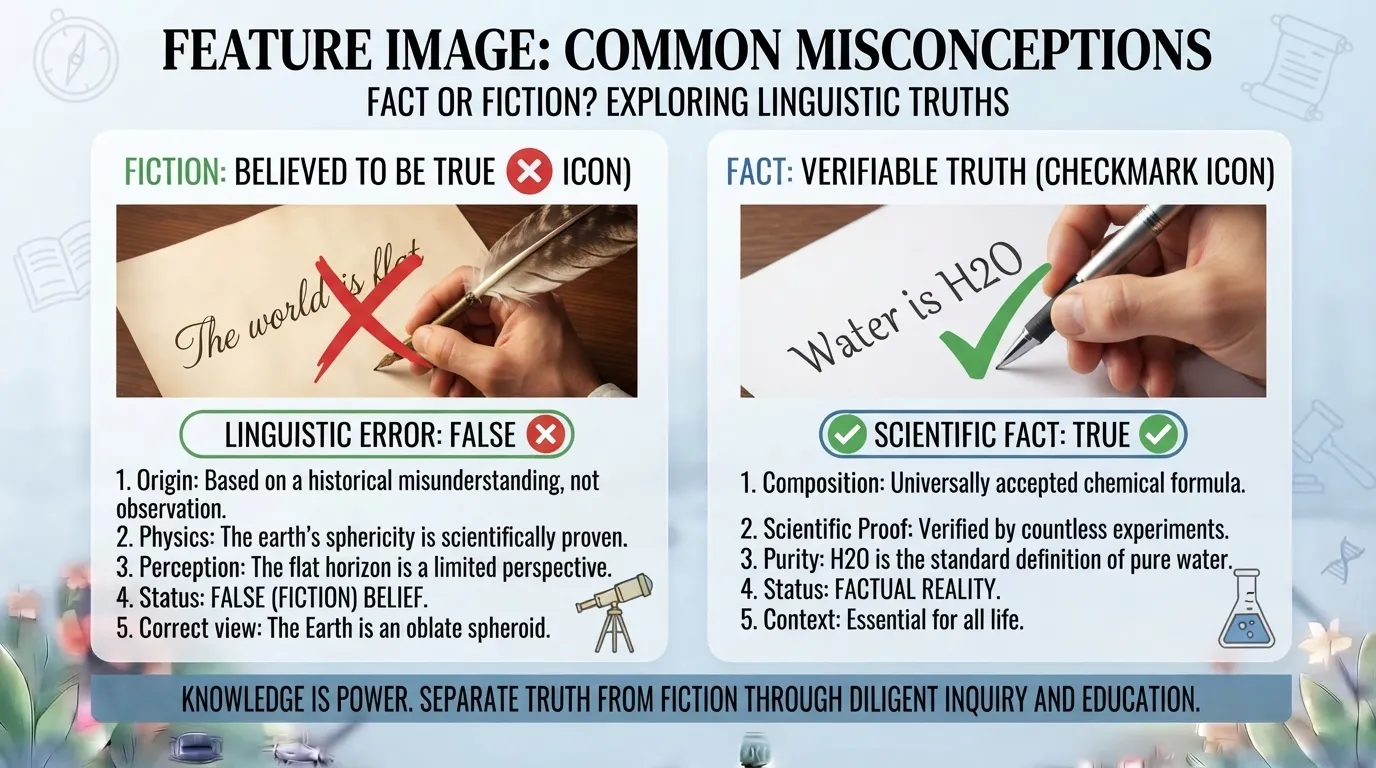
A fact is true and can be checked. Fiction is made up and comes from imagination.
Mia is reading a story to her little brother. He stops her and asks, “Is this real?” Mia isn’t sure how to answer. The story feels true, but she knows the writer made it up. This simple question, fact or fiction, comes up more than we think.
A fact is something true. You can check it and prove it. Fiction is something made up. A writer creates it from imagination. Fact tells you what really happened. Fiction tells a story that never truly happened, even if it feels real.
People search “fact vs fiction” because the line between the two can get blurry. Movies mix real events with made-up scenes. News can get twisted by rumors. Books can blend true history with fiction. This mix-up makes people want a clear way to sort fact from fiction.
Pronunciation
Fact
- US: “fakt”
- UK: “fakt” (same sound)
Fiction
- US: “FIK-shun”
- UK: “FIK-shun” (same sound)
- Read More About https://orlymean.com/spicy-or-spicey/
Difference Between Fact and Fiction
1. A fact is true. Fiction is made up.
- “Water boils at 100 degrees Celsius.” (fact)
- “A dragon lived under the mountain.” (fiction)
2. You can check a fact. You cannot check fiction the same way.
- “The sun rises in the east.” (you can check this)
- “A wizard cast a spell on the castle.” (you cannot check this, since it’s made up)
3. Facts stay the same no matter who tells them.
- “The Earth orbits the sun.”
- A fiction story can change every time a new writer tells it.
4. Fiction comes from imagination. Facts come from real events or proof.
- “She wrote a fiction story about a talking cat.”
- “Scientists proved this fact through experiments.”
5. News reports should stick to facts. Novels use fiction to tell stories.
- “The news reported the storm’s exact path.” (fact)
- “The novel told a story about a storm that never really happened.” (fiction)
6. People can measure, test, or observe facts.
- “The mountain is 5,000 meters tall.” (measured)
- “The mountain hides a hidden kingdom.” (imagined, not measured)
7. Fiction can borrow real facts to feel believable.
- A fiction book might use a real city as its setting.
- A fiction book might use real historical dates but still tell a made-up story.
8. Facts don’t change based on opinion.
- “Ice is colder than boiling water.” (always true)
- A fiction story’s ending can be whatever the writer decides.
9. Fiction includes genres like fantasy, mystery, and adventure.
- “The Hobbit” is a fantasy fiction story.
- A mystery novel is also a form of fiction.
10. Facts are used in science, history, and journalism. Fiction is used in storytelling and entertainment.
- “A history book reports facts about a past war.”
- “A historical fiction novel imagines characters living through that war.”
Nature and Behaviour of Fact and Fiction
Fact behaves like solid ground. It doesn’t shift or change based on someone’s mood or opinion. Once proven true, a fact stays true, whether people like it or not.
Fiction behaves like a flexible story. It bends and shapes itself to fit a writer’s imagination. It can borrow real facts, but its main goal is to tell a story, not report the truth.
Why People Get Confused About Fact and Fiction
Movies, books, and even news stories often blend fact and fiction together. A historical movie might use real events but add made-up scenes for drama. A viral post online might look like news but actually be a made-up story. This blending makes it harder for people to always tell fact from fiction at first glance.
Comparison Table
| Feature | Fact | Fiction |
| True or made up | True | Made up |
| Can be checked | Yes | No |
| Changes by writer | No | Yes |
| Common in | News, science, history | Novels, movies, stories |
| Similarity | Both can be shared through writing | Both can be shared through writing |
The Origin of Fiction
The word “fiction” comes from the Latin word “fictio,” meaning “a shaping” or “a making.” This root ties closely to the idea of a writer shaping a story out of imagination. Fiction as a form of storytelling goes back thousands of years, found in ancient myths, legends, and folktales passed down by word of mouth long before written books existed.
The word “fact” comes from the Latin word “factum,” meaning “something done” or “a deed.” Early uses of “fact” pointed to real actions or events, and over time, the word grew to mean any true, provable piece of information.
British vs American English
There is no spelling difference for “fact” or “fiction” between US and UK English. Both regions use the exact same words and meanings.
- US: “This book is based on fact, not fiction.”
- UK: “This book is based on fact, not fiction.”
Both British and American writers also use the phrase “fact or fiction” the same way, often in headlines or debates about whether a claim is true.
Which One Should You Use?
- US: Use “fact” for real, provable information. Use “fiction” for made-up stories, whether in books, movies, or shows.
- UK: Same rule applies across British English.
- Global: Always use “fact” when describing something true and checkable. Use “fiction” when describing an imagined story or invented tale.
Common Mistakes
- Wrong: Treating a fiction story as if it reports real history. Correct: Remember that fiction, even historical fiction, includes made-up characters or events.
- Wrong: Assuming all news is automatically fact. Correct: Always check sources, since some reports mix opinion or rumor with fact.
- Wrong: Calling a true story “fiction” just because it feels dramatic. Correct: A dramatic true story is still fact, as long as it really happened.
Everyday Usage Examples
Email: “Please confirm these numbers are fact before we include them in the report.”
Social Media: “Fact or fiction: does this viral post actually tell the truth?”
News: “Reporters work hard to separate fact from fiction before publishing a story.”
Formal Writing: “This essay explores the line between historical fact and creative fiction.”
Usage Trends
“Fact vs fiction” remains a popular phrase, especially with the rise of viral posts and online rumors. People often search this phrase to check whether a claim, video, or story is true or simply made up for entertainment.
Metaphors and Similes
- “The truth felt as solid as stone, while the rumor floated like smoke.” This metaphor contrasts solid fact with unclear fiction or rumor.
- “Her story blurred fact and fiction like watercolors bleeding together.” This simile shows how the two can mix and become hard to separate.
Connotative Meaning
Fact
- Neutral: “This report lists several facts about the region.”
- Positive: “The clear facts helped settle the argument quickly.”
- Negative: “The harsh fact was hard for the family to accept.”
Fiction
- Neutral: “This fiction novel is set in a small town.”
- Positive: “The fiction story sparked her imagination for years.”
- Negative: “His excuse turned out to be pure fiction.”
Idioms and Proverbs
- “Stranger than fiction” — meaning something real feels even more unbelievable than a made-up story.
- “The whole event was stranger than fiction.”
- “Fact of life” — meaning something true that must simply be accepted.
- “Taxes are just a fact of life.”
Literature and Movies
Literature: Historical fiction, a popular genre blending real history with invented characters, includes famous works like War and Peace by Leo Tolstoy, published in 1869, which mixes real historical events with fictional characters and stories.
Movies: Fargo (1996) is a film from the United States. It claims to be based on a true story, but much of it is fiction. This has led to debates about what is fact and what is fiction.
Why This Difference Matters
Understanding the difference between fact and fiction helps people think critically about the information they read and watch. In a world full of viral posts, exaggerated stories, and mixed media, people can avoid false information by learning to separate fact from fiction.
- Helps you spot misleading headlines online.
- Helps you enjoy fiction without confusing it with real history.
- Helps you research topics with more accuracy.
- Helps you have clearer, fact-based conversations with others.
Situational Preference
Use facts when you research, report news, or make important decisions. Accuracy is important.
Enjoy fiction for entertainment, imagination, or a good story. Fiction is meant to engage and inspire, not to show the exact truth.
Some works mix fact and fiction, such as historical fiction or dramatized news. Stay alert in these cases. Check which parts are proven facts and which parts the writer added.
Possible Short Questions
Q1: What is the main difference between fact and fiction? A fact is true and can be checked. Fiction is made up and comes from imagination.
Q2: Can fiction include real facts? Yes. Many fiction stories use real places, dates, or events as a backdrop for made-up characters and plots.
Q3: Is all news automatically fact? No. Some news may include opinions, rumors, or claims that are not proven. So, check the source carefully.
Q4: Why do people confuse fact and fiction? Movies, books, and online posts often blend real events with invented details, making the line between them harder to see.
Q5: What genre blends fact and fiction the most? Historical fiction often blends real historical events with fictional characters and storylines.
Q6: How can I tell if something is fact or fiction?
Check trusted sources. Look for evidence.
Conclusion
Fact and fiction serve two very different purposes in how we understand the world. You can check a fact through evidence or proof. Fiction is a made-up story, built from imagination, meant to entertain, inspire, or explore ideas.Both can appear in books, movies, and news. Knowing the difference between fact and fiction helps you think clearly. It helps you enjoy stories without thinking they are real history. It helps you find false claims online. This can stop you from sharing false information by mistake.The next time a surprising claim or story is seen, ask yourself: Can it be proven to be a fact? Or is it fiction that someone imagined and created?That simple question can guide you toward clearer thinking every single day.

I’m Ghafoor Khan, a content writer and blogger at Orly. I write simple, engaging articles on English grammar, word meanings, synonyms, antonyms, and vocabulary to help readers improve their English skills.





1 thought on “Fact or Fiction: How to Tell the Real from the Made-Up”