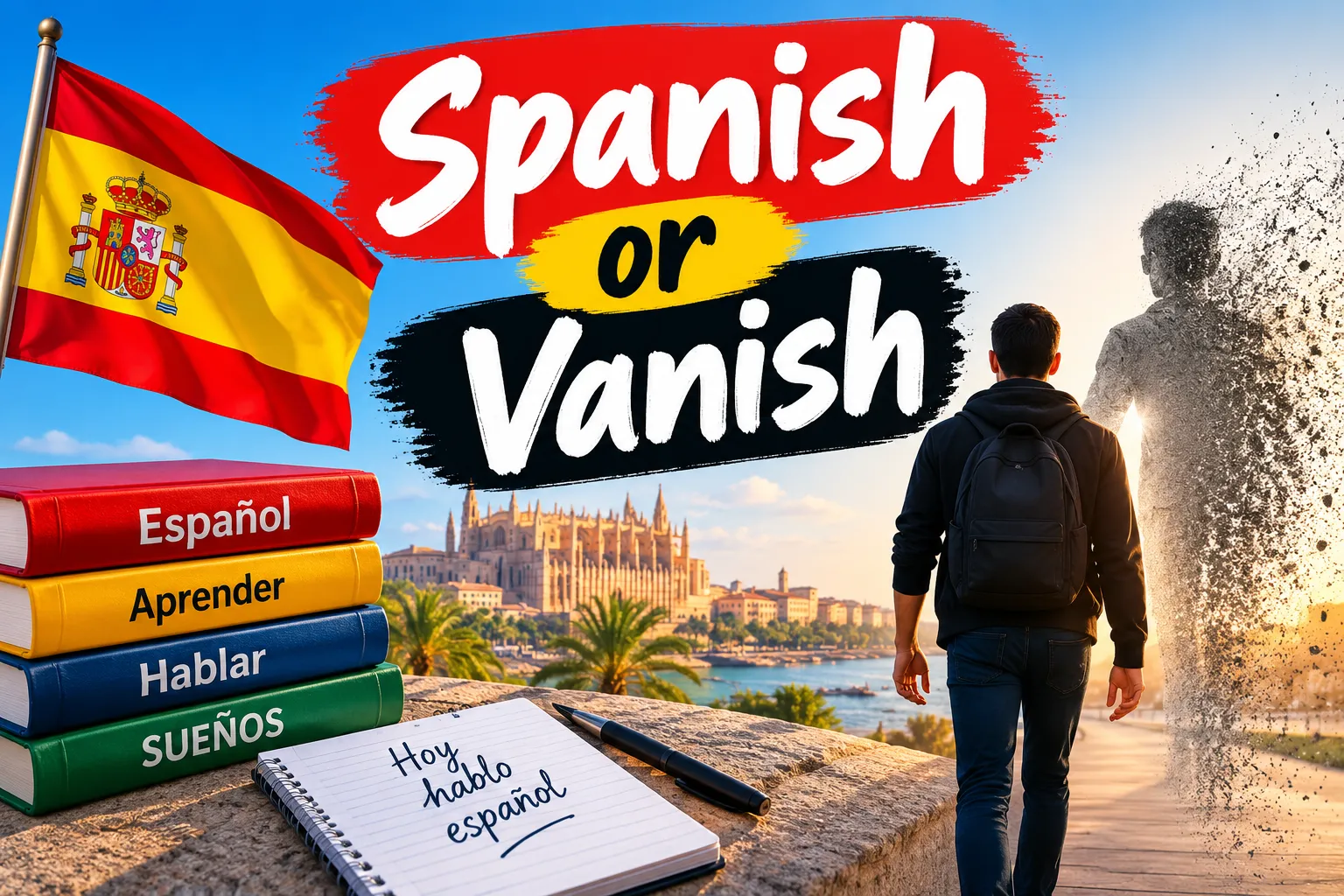
“Spanish” is about Spain and its language. “Vanish” means to disappear fast. They rhyme, but they mean different things.
My daughter wrote a poem for school. She wrote, “My Spanish book seemed to vanish overnight.” Her teacher loved it. It sounded fun, even though the two words have no real link. That’s the fun part of English. Two words can sound alike but mean totally different things.
“Spanish” tells you about Spain. It can mean the language, the food, or the people. “Vanish” means something goes away fast, often with no warning. People search for “Spanish or vanish” not because they mix up the meaning, but because the rhyme sounds cool. They want to use it in a poem, a song, or just a fun sentence. This shows how English rhymes link words from very different worlds. Once you know what Spanish and vanish mean on their own, you can use this rhyme with ease in your own writing.
Pronunciation
Spanish
- US English: /ˈspænɪʃ/ (say “SPAN-ish”)
- UK English: /ˈspænɪʃ/ (same, “SPAN-ish”)
Vanish
- US English: /ˈvænɪʃ/ (say “VAN-ish”)
- UK English: /ˈvænɪʃ/ (same, “VAN-ish”)
- Read More About https://orlymean.com/calfs-or-calves/
Difference Between Spanish and Vanish
1. Word Type
“Spanish” is a noun or a describing word. “Vanish” is an action word.
- Example: She speaks Spanish well.
- Example: The magician made the coin vanish.
2. Main Meaning
“Spanish” is about Spain and its language. “Vanish” means to disappear fast.
- Example: Spanish is spoken in many places.
- Example: The fog began to vanish by noon.
3. Word Group
“Spanish” is a nation and language word. “Vanish” is a word about things going away.
- Example: Spanish, French, and Italian are all similar languages.
- Example: Vanish, disappear, and fade all mean things go away.
4. Job in a Sentence
“Spanish” names or tells you about something. “Vanish” shows an action taking place.
- Example: I love Spanish food.
- Example: My keys always seem to vanish.
5. Feeling Behind the Word
“Spanish” feels plain and normal. “Vanish” often feels strange or full of mystery.
- Example: Spanish class starts at nine.
- Example: The man seemed to vanish in the crowd.
6. Where You See It Often
“Spanish” shows up in school and travel talk. “Vanish” shows up in stories and magic shows.
- Example: I’m learning Spanish this year.
- Example: The rabbit will vanish behind the hat.
7. Rhyme Use
Both words end the same way, so they rhyme in poems and songs.
- Example: “My worries vanish when I speak Spanish.”
- Example: “The stars will vanish, but Spanish stays.”
8. How Formal It Feels
“Spanish” fits both plain and formal writing. “Vanish” fits more into story writing.
- Example: The report was written in Spanish.
- Example: The proof seemed to vanish overnight.
9. Link to a Place
“Spanish” links to Spain and Spanish-speaking places. “Vanish” has no link to any place.
- Example: Spanish is the main language of Spain.
- Example: You can use “vanish” in any story, in any country.
10. Words It Pairs With
“Spanish” pairs with words like “language” or “food.” “Vanish” pairs with words like “suddenly” or “trick.”
- Example: Spanish food is full of flavor.
- Example: The ship seemed to vanish without a trace.
How Spanish and Vanish Act
Spanish acts like a steady name word. It tells you about a language or a place, and it stays the same in every sentence.
Vanish acts like a fast action word. It shows something going from here to gone, often in a hurry. It changes form, like “vanished” or “vanishing.”
Why These Words Rhyme So Well
“Spanish” and “vanish” end with the same sound. This happens even though the two words come from very different roots. English often makes rhymes this way, pulling words from far apart but making them sound alike at the end.
Comparison Table
| Feature | Spanish | Vanish |
| Word type | Noun/describing word | Action word |
| Meaning | Language, nation, culture | To disappear fast |
| Common use | School, travel | Stories, magic |
| Feeling | Plain | Mysterious |
| Rhymes with | Vanish, banish | Spanish, banish |
| Link to a place | Yes, Spain | No |
The History of Spanish and Vanish
“Spanish” comes from the Latin word “Hispania,” an old name for the land now called Spain. Over time, this became “España” in Spanish and “Spain” in English.
“Vanish” comes from an old French word, “esvanir,” which came from Latin “evanescere,” meaning “to fade away.” English later shaped this into “vanish,” keeping the same idea of something going away fast.
Which One Should You Use?
Use “Spanish” when you talk about the language, people, or food tied to Spain. Use “vanish” when you talk about something going away fast, in a story or in real life. Both words work the same in the US, the UK, and every other English-speaking place.
Common Mistakes
- Wrong: Using “vanish” to mean a nation or language. Correct: Use “Spanish” for that, and save “vanish” for disappearing.
- Wrong: Writing “spanish” with a small “s.” Correct: Always write “Spanish” with a big “S.”
- Wrong: Mixing up “vanish” with “banish,” which means to send someone away. Correct: Use “vanish” for disappearing and “banish” for sending away.
- Wrong: Saying “The smoke vanish” instead of the past form. Correct: Say “The smoke vanished.”
Everyday Usage Examples
Email: “I’m sending the Spanish copy of the file.”
Social Media: “My energy seems to vanish every Monday!”
News: “The hikers seemed to vanish near the trail.”
Formal Writing: “The company offers help in Spanish and English.”
What’s Popular Now
“Spanish” stays very popular, since many people around the world learn or speak it. “Vanish” stays popular in stories, movies, and magic acts, since writers love strong action words like this one.
Fun Comparisons
“Vanish like smoke” means something goes away fast and fully, just like smoke fading into the air. “Spanish” doesn’t fit this kind of phrase as easily, but you might hear “as rich as Spanish culture” to show depth and history.
How People Feel About Each Word
Positive: “Spanish culture” often feels warm and full of life.
Negative: “Vanish without a trace” can feel scary, especially in stories about missing people.
Neutral: “She studies Spanish” is just a plain fact.
Idioms and Sayings
“Vanish into thin air” means someone or something disappears fully and fast. Example: “After the show, the magician seemed to vanish into thin air.”
There’s no old saying built just for “Spanish,” but “when in Rome” carries a similar idea, since it’s often said when learning a new language like Spanish while visiting a new place.
Books and Movies
In books, Spanish language and life show up in “Don Quixote” by Miguel de Cervantes, a funny story first printed in 1605. Many call it one of the most important books in Spanish writing.
In movies, “vanish” often shows up in mystery film titles, like American thrillers from the 2000s about people going missing. Spanish-language films from Spain and Latin America also earn fans around the world.
Why This Rhyme Matters
This rhyme shows how English sounds can link words that mean nothing alike. For poets and writers, seeing rhymes like this helps build a feel for rhythm and sound. For everyday speakers, it’s just a fun surprise in how English works.
How This Helps in Daily Life
You might use “Spanish” if you study languages or travel a lot. You might use “vanish” when telling a story or talking about lost items. Knowing both words well helps you use each one the right way.
Which Fits Your Sentence
Use “Spanish” when your sentence is about language, people, or a place tied to Spain. Use “vanish” when your sentence is about something going away, in real life or in a story. In poems or songs, these two words make a fun rhyme pair. In plain, everyday writing, keep them apart, since they never mean the same thing.
Possible Short Questions
Do “Spanish” and “vanish” ever mean the same thing? No. They only share a matching sound, not a matching meaning.
Why do these words rhyme so well? They end with the same sound, even though they come from different word roots.
Can “vanish” describe a person going missing? Yes, it often means a person, thing, or feeling goes away suddenly.
Is “Spanish” always written with a big letter? Yes, since it names a language and a people, it always starts with a capital “S.”
What other word rhymes with both? “Banish” also rhymes with both, and it means to send someone away.
Can I use this rhyme in a poem? Yes, it works well in fun or thoughtful poems and songs.
Is “vanish” a formal word? It works in both plain and formal writing, but shows up more in stories.
Conclusion
“Spanish” and “vanish” rhyme in a fun way, but they mean very different things. “Spanish” points to a language and a place, full of history and culture. “Vanish” means something goes away fast, often with a bit of mystery. Together, they show how English rhymes can link words that live in totally different worlds.
Knowing both words well helps you use them the right way, in school work, travel talk, or a fun poem. If you ever want a playful rhyme in your writing, “Spanish” and “vanish” make a great pair. Just remember, they may sound alike, but their meanings stay far apart.

I’m Ghafoor Khan, a content writer and blogger at Orly. I write simple, engaging articles on English grammar, word meanings, synonyms, antonyms, and vocabulary to help readers improve their English skills.









1 thought on “Spanish or Vanish: A Fun Rhyme With Two Very Different Meanings”