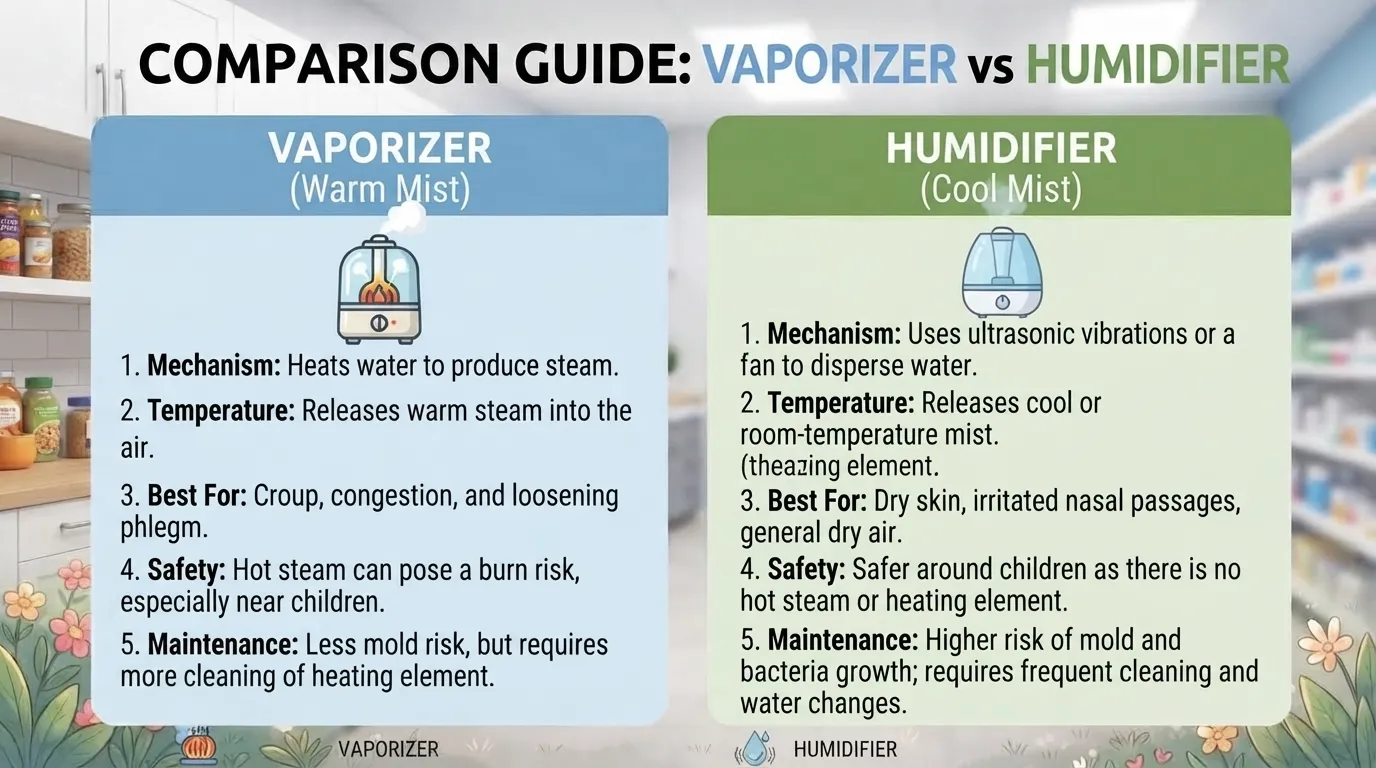
A vaporizer heats water into steam. A humidifier often makes a cool mist. In fact, a vaporizer is really just one type of humidifier.
Picture a mom named Lisa. Her son has a stuffy nose at night. She runs to the store. She stands in front of two machines. One box says vaporizer. One box says humidifier. She isn’t sure which one will help her son breathe better. Many parents face this same choice.
A vaporizer and a humidifier both add moisture to dry air. But they do this in different ways. A humidifier often makes a cool mist, using vibration or a spinning disk to break water into tiny drops. A vaporizer heats water first, then sends out steam. Since a vaporizer is a kind of humidifier, the two words often get mixed together.
People search “vaporizer vs humidifier” because both machines look alike and both fight the same problem: dry air. Dry air can make a cough feel worse. It can dry out skin and cause nosebleeds. This small mix-up between vaporizer and humidifier can matter a lot, especially in homes with babies or pets.
Pronunciation
Vaporizer
- US: “VAY-per-ry-zer”
- UK: “VAY-per-ry-zer” (same sound)
Humidifier
- US: “hyoo-MID-uh-fy-er”
- UK: “hyoo-MID-uh-fy-er” (same sound)
Difference Between Vaporizer and Humidifier
1. A vaporizer heats water. A cool-mist humidifier does not.
- A vaporizer boils water to make steam.
- A cool-mist humidifier uses vibration or a spinning disk, with no heat.
2. A vaporizer sends out warm steam. A humidifier often sends out cool mist.
- Warm steam from a vaporizer can feel calming in a cold room.
- Cool mist from a humidifier feels light and fresh.
3. A vaporizer carries more risk of burns. A cool-mist humidifier does not.
- Hot water inside a vaporizer can burn skin if it spills or tips.
- A cool-mist humidifier has no hot parts to worry about.
4. A vaporizer can hold added inhalants. A humidifier usually cannot.
- Some vaporizers let you add essential oils or menthol for colds.
- Most cool-mist humidifiers are made for plain water only.
5. A cool-mist humidifier often needs more frequent cleaning.
- Humidifiers can grow mold or mineral buildup if not cleaned often.
- Vaporizers carry less risk of mineral buildup and mold, since the water is boiled first.
6. A vaporizer often uses more electricity. A humidifier often uses less.
- The heating part inside a vaporizer needs more power.
- A cool-mist humidifier’s fan or disk uses less power.
7. A humidifier is often safer for homes with kids and pets.
- A cool-mist humidifier has no hot water to spill.
- A vaporizer is not safe near young kids or pets that might tip it over.
8. A vaporizer may release fewer contaminants into the air.
- Boiling water in a vaporizer can kill some germs before it turns to steam.
- A cool-mist humidifier can release small mineral particles if not cleaned well.
9. Both machines fight dry air, but for slightly different needs.
- A vaporizer often helps with cold and flu symptoms, especially with added inhalants.
- A humidifier often helps year-round in dry rooms or dry climates.
10. Both machines are sold at similar prices.
- Most humidifiers cost less than $100.
- Most vaporizers stay in a similar low price range too.
Nature and Behaviour of Vaporizer and Humidifier
A vaporizer acts like a small stove. It heats water until it becomes steam. The steam cools slightly before it leaves the machine and enters the air. It works fast and can carry added inhalants, but it comes with a small burn risk.
A humidifier, especially a cool-mist type, acts like a gentle mist machine.It uses vibration or a spinning disk to turn water into tiny, cool drops. It adds moisture without heat, so the air feels light and fresh. Regular cleaning is needed to prevent mold and mineral buildup.
Why People Get Confused About Vaporizer and Humidifier
Both machines are often found in the same store aisle. Both add moisture to dry air. They can also help with stuffy noses and dry skin.The biggest reason for the mix-up is simple: a vaporizer is really just a type of humidifier, so the two words often blend together, even though the way each one makes moisture is different.
Comparison Table
| Feature | Humidifier (cool-mist) | Vaporizer |
| Adds moisture to air | Yes | Yes |
| Uses heat | No | Yes |
| Needs frequent cleaning | Yes | Less often |
| Safe for kids and pets | Yes | Not as safe |
| Can add inhalants | Usually no | Yes |
| Uses less electricity | Yes | No |
| Similarity | Both raise humidity in a room | Both raise humidity in a room |
The Origin of Vaporizer
The word “vaporizer” comes from “vapor,” a word tied to old Latin roots meaning “steam” or “breath.” Early steam machines date back over a hundred years, first used in factories and later shrunk down for home health use. By the 1900s, small home vaporizers became common for treating colds and coughs.
The word “humidifier” comes from “humid,” also tied to Latin, meaning “moist” or “damp.” Home humidifiers grew popular in the 1900s too, especially as indoor heating made winter air dry.
British vs American English
There is no spelling difference for vaporizer and humidifier between US and UK English.
- US: “We use a vaporizer in the winter.”
- UK: “We use a vaporizer in the winter.”
In the UK, the word “humidifier” often gets used as the main term, even for warm-mist types, while “vaporizer” is used a bit less in daily talk.
Which One Should You Use?
- US: Many parents use vaporizers for sick kids, since they can add inhalants for cold relief. Many households use cool-mist humidifiers daily for dry air and easy cleaning routines.
- UK: Humidifier stays the more common word overall, covering both cool-mist and warm-mist types.
- Global: Choose a vaporizer if you want to add inhalants and don’t have small kids or pets nearby. Choose a cool-mist humidifier for safer, everyday use around families.
Common Mistakes
- Wrong: Leaving a hot vaporizer within a child’s reach. Right: Keep vaporizers at least 4 feet away from where kids play or sleep.
- Wrong: Never cleaning a cool-mist humidifier. Right: Clean it daily, and give it a deeper scrub every third day, to stop mold and mineral buildup.
- Wrong: Letting home humidity climb too high. Right: Keep indoor humidity below 50% to avoid mold growth.
Everyday Usage Examples
Email: “Please remember to clean the humidifier tank before you refill it tonight.”
Social Media: “Running my vaporizer with a little eucalyptus oil tonight. My throat feels so much better!”
News: “Doctors suggest a cool-mist humidifier for babies with stuffy noses, since it carries less risk of burns.”
Formal Writing: “A steam vaporizer may release fewer airborne contaminants, since the water is boiled before it becomes vapor.”
Usage Trends
Humidifier searches often rise in winter, when indoor heating dries out the air. Vaporizer searches often rise during cold and flu season, when people want fast relief with added inhalants. Both stay steady topics in home and health searches each year.
Metaphors and Similes
- “The room felt like a warm, misty jungle” describes the steam from a vaporizer.
- “The air felt light, like a cool morning fog” describes the mist from a humidifier.
Connotative Meaning
Vaporizer
- Neutral: “The vaporizer sits on the nightstand.”
- Positive: “The vaporizer with eucalyptus oil helped clear his stuffy nose fast.”
- Negative: “The hot vaporizer felt risky with toddlers around.”
Humidifier
- Neutral: “The humidifier runs all winter.”
- Positive: “The clean humidifier made the air feel fresh and easy to breathe.”
- Negative: “The dirty humidifier filter added mold spores to the air.”
Idioms and Proverbs
There are no old idioms tied to vaporizer or humidifier, since both are modern invented words. But people often say things like “clear the air,” which fits the general idea of both machines.
- “Let’s clear the air in here with the humidifier running.”
Literature and Movies
Vaporizers and humidifiers rarely appear in classic literature or major films, since they are modern home devices. However, health and parenting books, a popular nonfiction genre since the mid-1900s, often mention both machines when giving tips for colds, dry skin, and better sleep.
Why This Difference Matters
Knowing the difference helps people choose the safer, more useful machine for their home. It helps parents protect small children and pets from hot steam. It helps anyone with dry skin, allergies, or a stuffy nose pick the right tool, and it helps everyone avoid mold problems from a dirty, uncleaned machine.
Usefulness in Daily Life
- Helps ease dry skin and chapped lips in winter.
- Helps clear stuffy noses during colds.
- Helps protect wood floors and furniture from dry air.
Situational Preference
Choose a vaporizer if you want the option to add inhalants like essential oils, and if there are no small kids or pets nearby to knock it over. Choose a cool-mist humidifier for safer, everyday use around babies, kids, or pets, as long as you keep up with regular cleaning to avoid mold. If safety is your top concern, a cool-mist humidifier is often the better daily pick, while a vaporizer suits short-term, closely watched use during illness.
Possible Short Question
Q1: Is a vaporizer the same as a humidifier? A vaporizer is actually a type of humidifier. It heats water into steam, while many humidifiers make a cool mist instead.
Q2: Which one is safer for babies? Cool-mist humidifiers are often safer, since they don’t carry hot water or steam that can burn.
Q3: Can I add essential oils to a humidifier? Most cool-mist humidifiers are made for plain water only. Vaporizers are more often built to handle added inhalants.
Q4: Do both machines need cleaning? Yes, but cool-mist humidifiers often need more frequent cleaning to stop mold and mineral buildup than vaporizers do.
Q5: Can too much humidity cause problems? Yes. Keeping indoor humidity above 50% can lead to mold growth. A hygrometer can help you track the level.
Q6: Do vaporizers or humidifiers treat asthma? Neither treats asthma directly. They can ease discomfort from dry air, but they should never replace a doctor’s asthma treatment plan.
Q7: Which one should I buy for year-round use? A cool-mist humidifier often works better for everyday, year-round comfort, while a vaporizer suits short-term cold relief with added inhalants.
Conclusion
Vaporizer and humidifier both add moisture to dry air, and a vaporizer is really just one type of humidifier. A vaporizer heats water and sends out warm steam, often used for quick cold relief with added inhalants. A cool-mist humidifier skips the heat and sends out a gentle, cool mist, often used for everyday comfort in dry rooms.Knowing this difference helps you pick the right machine for your home and your family’s needs. It helps you protect small children and pets from hot steam. It helps you choose steady comfort for dry winter air, or quick relief during a cold, all while keeping your machine clean and your home’s humidity in a healthy range.Next time you stand in that store aisle, you’ll know exactly what to look for. A warm vaporizer for short-term relief, or a cool humidifier for everyday comfort. Either way, both machines can help you and your family breathe a little easier.

I’m Ghafoor Khan, a content writer and blogger at Orly. I write simple, engaging articles on English grammar, word meanings, synonyms, antonyms, and vocabulary to help readers improve their English skills.











1 thought on “Vaporizer vs Humidifier: Which One Clears the Air Better?”